

How Long Does Resin Flower Preservation Take?
One of the most frequently asked questions from couples looking for wedding flower preservation is:
"How long does resin flower preservation take?"
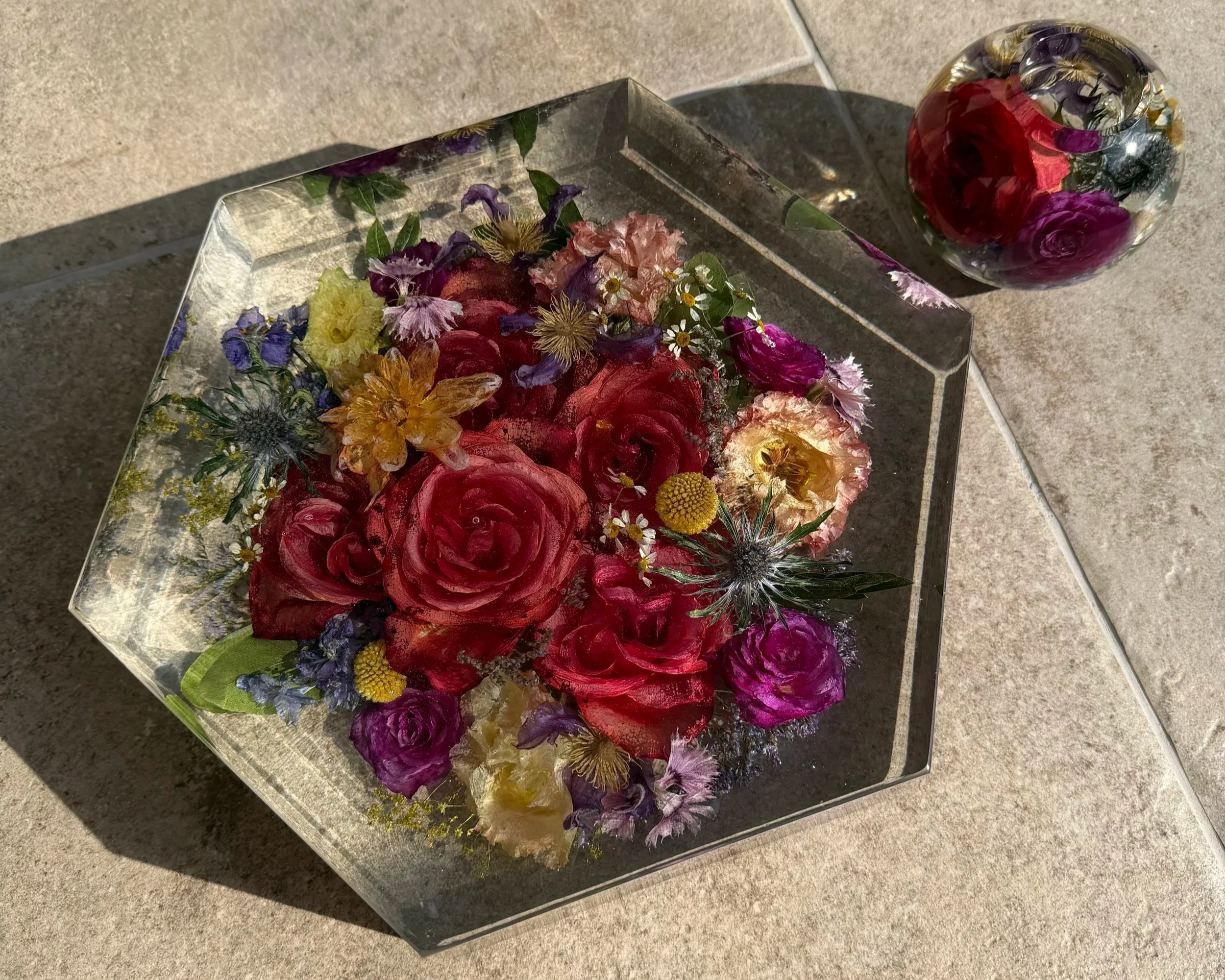
If you've recently sent your bouquet for wedding bouquet preservation or are researching resin flower preservation UK, you may be surprised to learn that creating a professional flower keepsake is not a quick process.
The reality is that high-quality resin wedding bouquet preservation takes time. Every piece is individually handcrafted, and there are multiple stages involved before your flowers can be transformed into a beautiful keepsake.
At Petals Preserved, our typical turnaround time is 4–8 months, depending on the size and complexity of your order.
While this may sound like a long time, understanding what happens behind the scenes helps explain why professional flower preservation cannot be rushed.
Why Does Resin Flower Preservation Take So Long?
Unlike mass-produced products, every piece of wedding flower preservation is completely unique.
No two bouquets are the same.
Each arrangement contains different flower varieties, colours, textures, and levels of moisture. Every bouquet must be individually assessed and preserved using techniques designed to achieve the best possible result.
The preservation process involves:
Drying the flowers
Preparing and cleaning the blooms
Designing the layout
Casting in resin
Multiple curing stages
Sanding and finishing
Quality checks
Packaging and delivery
Each stage takes time, and many stages cannot be rushed without affecting the final result.
Stage 1: Drying the Flowers (4–8 Weeks)
Before flowers can be placed into resin, they must be completely dried.
Fresh flowers contain a large amount of moisture, which would cause mould, discolouration, and deterioration if trapped inside resin.
For professional wedding bouquet preservation, flowers are typically dried in silica gel for between 4 and 8 weeks.
This stage is one of the most important parts of the entire process.
Many customers searching:
How long does flower preservation take?
How are wedding flowers preserved?
Can fresh flowers go into resin?
are surprised to learn that drying alone can take up to two months.
Stage 2: Flower Preparation and Design
Once the flowers have dried, each bloom is carefully inspected and prepared.
This stage includes:
Removing damaged petals
Cleaning flowers
Selecting the best blooms
Planning the final design
Creating layouts for resin blocks and keepsakes
This ensures your finished wedding flower keepsake showcases your flowers in the most beautiful way possible.
Stage 3: Resin Casting
This is the stage most people think of when they hear resin flower preservation.
However, resin casting itself is far more complicated than simply pouring resin into a mould.
Large resin pieces cannot be poured all at once.
Instead, they are built gradually using multiple layers.
Each layer must cure fully before the next can be added.
This helps prevent:
Excessive heat
Cracking
Distortion
Bubbles
Flower movement
For larger pieces such as wedding bouquet resin blocks, arches, and deep display pieces, multiple pours are often required.
Stage 4: Resin Curing
Even after the final resin pour has been completed, the resin continues curing.
Most professional casting resins require significant curing time before sanding and finishing can begin.
While some resins may feel hard after a few days, full curing takes much longer.
This stage is essential for creating durable, long-lasting wedding flowers in resin.
Stage 5: Sanding and Polishing
Once the resin has cured, every piece must be finished by hand.
This stage often includes:
Sanding
More sanding
Fine polishing
Edge correction
Surface refinement
Top coating
Creating the crystal-clear finish associated with luxury resin wedding bouquet preservation takes many hours of careful hand-finishing.
In fact, the finishing stage alone can take longer than many people realise.
Why Can't Resin Flower Preservation Be Rushed?
This is perhaps the most important question.
The answer is simple:
Resin and flowers work to their own timescales.
Rushing the process can lead to:
Trapped moisture
Yellowing
Bubbles
Cracking
Cloudiness
Distorted flowers
Poor long-term durability
Professional wedding flower preservation UK artists prioritise quality over speed because your bouquet cannot be replaced.
Most couples would rather wait a little longer for a beautiful keepsake than receive a rushed piece that doesn't stand the test of time.
Does Every Order Take the Same Amount of Time?
No.
Several factors affect turnaround times, including:
Bouquet Size
Larger bouquets contain more flowers and require more preparation.
Product Type
A simple ring holder may take less time than a large 30cm resin square or statement arch.
Seasonal Demand
Wedding season is typically the busiest time of year for flower preservation artists.
Number of Items Ordered
Many couples choose multiple keepsakes from one bouquet, which increases production time.
Is the Wait Worth It?
We believe so.
Many couples search for:
Preserve wedding bouquet
Wedding flower preservation UK
Resin bouquet preservation
Wedding flowers in resin
Wedding flower keepsake
because they want a lasting reminder of one of the most important days of their lives.
These flowers carried down the aisle, featured in photographs, and formed part of memories you'll treasure forever.
Creating a beautiful keepsake from them is not something that should be rushed.
Wedding Flower Preservation UK
At Petals Preserved, we specialise in wedding flower preservation, wedding bouquet preservation, and bespoke resin flower preservation for couples across the UK.
Our typical turnaround time is 4–8 months from final payment, allowing sufficient time for drying, preservation, resin casting, curing, sanding, polishing, and finishing.
Every piece is individually handcrafted using your own flowers, ensuring a unique keepsake that captures the beauty and memories of your wedding day for years to come.
If you're considering resin wedding bouquet preservation, we recommend booking your slot before your wedding date to ensure availability during peak wedding season.